
Running a Sex Offender Check in Roscommon County
The official starting point is the Michigan Public Sex Offender Registry, or PSOR. Michigan State Police maintain the system and publish the portion of registration data that state law makes public. Select Roscommon in the county field for a countywide view, search by a person’s name, or use an address and radius for a neighborhood check. A name search needs both first and last name, though partial names are accepted. Registration and MDOC numbers offer more exact alternatives when either identifier is known.
PSOR is not a list of every person ever convicted of a sex offense. Publication can turn on the governing registration law, the offense date and tier, a court order, an out-of-state registration duty, or later relief. The public site is also narrower than the law-enforcement Sex Offender Registry. That distinction matters when a Roscommon County result is absent. Confirm the search terms, try the geographic tools, and contact an official office instead of treating a blank screen as proof that no registration exists.
Roscommon PSOR Search Controls
The official PSOR search form shows several routes into the same public data. The captured interface helps a user identify the county filter, name fields, and list options before opening any individual profile.
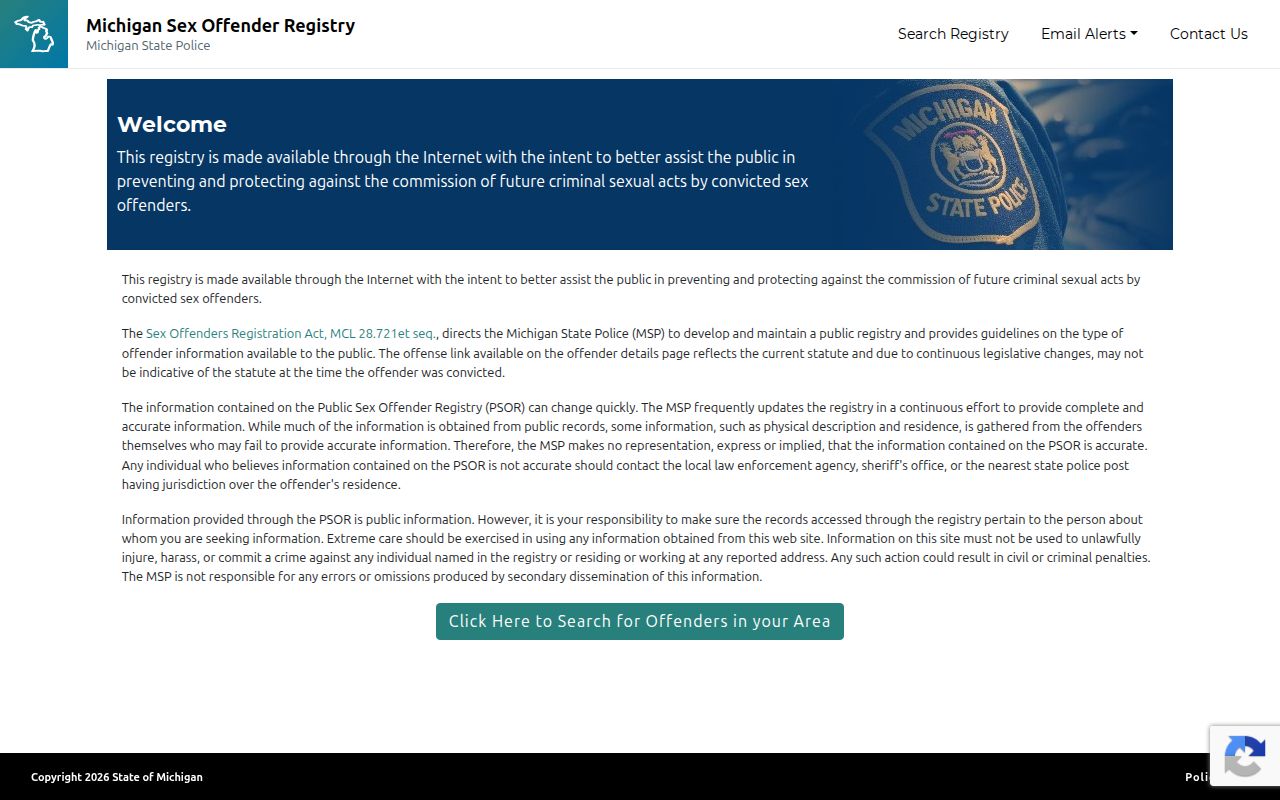
The form separates person-based searches from place-based searches. That makes it useful both when a name is known and when the goal is general community awareness near a Roscommon County address.
Searching the Michigan Public Sex Offender Registry
Use the narrowest reliable facts first. A registration or MDOC number is less likely to produce a false match than a common name. For an address search, PSOR requires enough location context, such as city, county, or ZIP. The neighborhood map then applies the chosen radius. Michigan State Police warn that high user volume can interrupt access, so retry later if the official portal is unavailable.
- Open PSOR and review its conditions of use before starting the Roscommon County sex offender search.
- Choose a name, registration number, MDOC number, county, ZIP, or neighborhood-address route and enter the required fields.
- Review the result list cautiously, matching more than a name whenever the public profile provides other identifiers.
- Open “View Details,” check the current status and registration facts, then use official contact channels for unresolved concerns.
The main controls documented by Michigan State Police are summarized below. The system also offers statewide lists for all published, incarcerated, or non-compliant registrants.
| Field or Control | Type | How It Works | Roscommon Use |
|---|---|---|---|
| First and last name | Text | Both are required; partial names are allowed | Search a known name |
| Registration or MDOC number | Text | Use one identifying number | Narrow a possible match |
| Street address | Text | Add city, county, or ZIP context | Search a local address |
| County | Dropdown | Select Roscommon | View the countywide published list |
| Neighborhood map | Map and radius | Choose 0.25, 0.50, 1, 2, or 5 miles | Check an area around a location |
Roscommon County Registration Contact
Questions about local registration should go to the Roscommon County Sheriff at 111 S. Second Street, Roscommon, MI 48653, or 989-275-5101. Official research did not locate a separate county registry app or a published registration appointment schedule. Call before visiting. State help is also available through the Michigan State Police registry office at 517-241-1806 or the CJIC registry hotline at 866-761-7678.
Roscommon County Sheriff
111 S. Second Street
Roscommon, MI 48653
989-275-5101
Local registration questions and reports of suspected noncompliance; call first for current hours.
Report a suspected violation rather than confronting a person. For an urgent threat, use emergency services. For a registry-data or statewide status question, MSP is the better custodian. A court file may add the charge, disposition, and sentence behind a listed offense, but the registry and court file serve different purposes.
What a Registry Profile Shows
A public profile can supply identity, location, offense, and status details that are not visible in a result-list row. Michigan State Police’s official registry guidance defines these fields and explains the public statuses. Victim information is never a public profile field. Do not copy or republish a Roscommon County registrant’s identifying details; check them on the live government record.
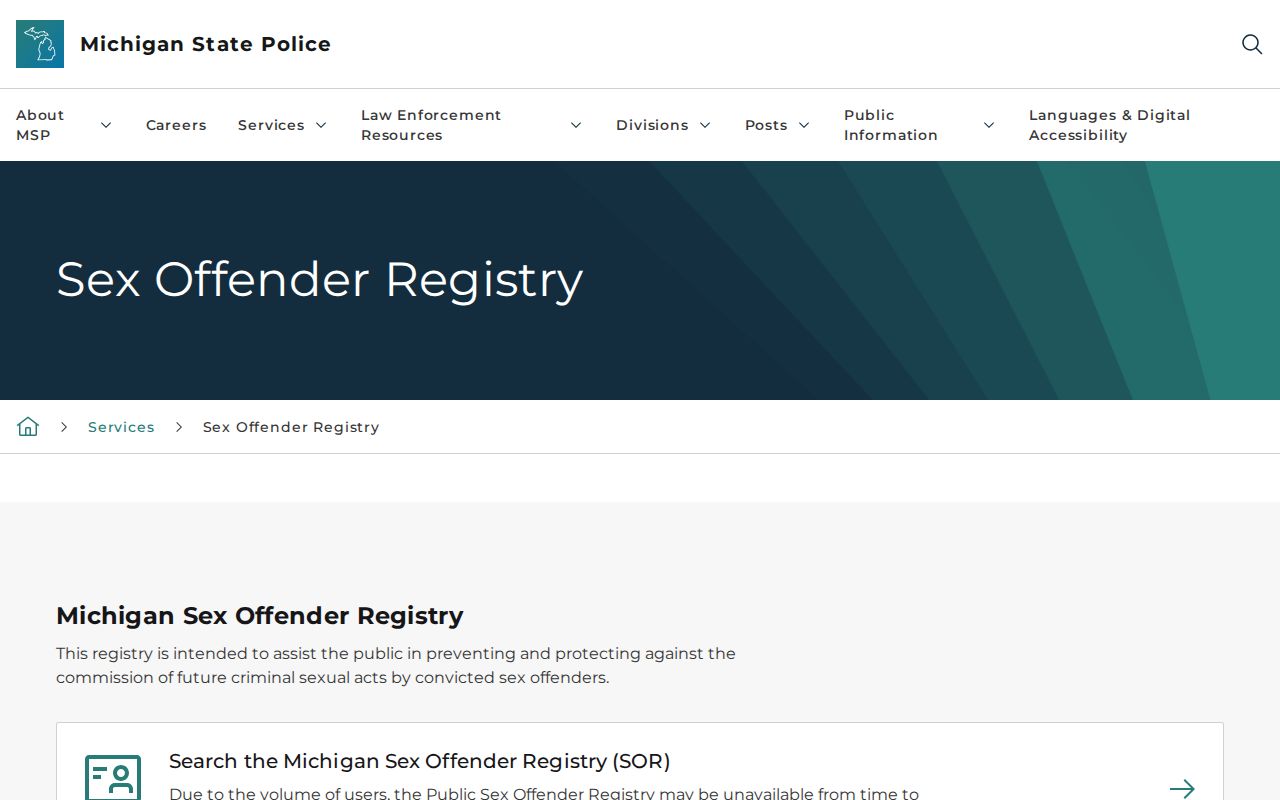
The official field guide is especially useful when a label is unclear. It keeps a searcher from turning a status code or offense category into an unsupported risk judgment.
| Name and Aliases | Published name, known aliases, date of birth, and registration number. |
|---|---|
| Photo and Marks | Photograph plus published scars, marks, and tattoos used for identification. |
| Address Details | Residential information and, when applicable, campus information. |
| Offense Information | Qualifying offense details; use the court file for the fuller case history. |
| Vehicle Information | Vehicle data included in the public profile under Michigan rules. |
| Registration Status | Current label such as active, incarcerated, absconder, homeless, school only, or employment only. |
Roscommon Registry Status Meanings
Status labels describe registration circumstances, not new criminal conduct. “Active” means residing in Michigan. “Incarcerated” means currently confined in Michigan. An “absconder” has left the last reported address and has unknown whereabouts, while “homeless” means no fixed or temporary residence. “Pending Out of State” concerns relocation while destination duties are unresolved. “Inactive Out of State,” “School Only,” and “Employment Only” describe people who live elsewhere but retain a Michigan connection.
- Public PSOR
- The published subset available for community searches.
- Law-enforcement SOR
- The broader registry containing public and nonpublic information for authorized agencies.
- Absconder
- A status showing that the last reported address was left and current whereabouts are unknown.
- Tier
- An offense-based statutory category, not a forecast of future behavior.
Always read the current profile date. Address information is reported under statutory duties and can change. If a Roscommon County entry looks stale or inconsistent, send the concern to law enforcement rather than trying to verify it through personal contact.
A conviction can be missing from the Roscommon County public results for lawful reasons. The matter may have been set aside or sealed, removed by court order, governed by an older registration rule, or recorded in another state without a published Michigan duty. The law-enforcement registry can also hold information that PSOR does not publish. None of these possibilities can be resolved by guessing from a name search. Check the court of conviction when known, use NSOPW for a possible out-of-state registration, and ask Michigan State Police about the public registry’s scope. The whole PSOR database cannot be downloaded, though an individual public profile may be printed.
Registration Requirements and Levels in Michigan
Michigan uses Tier I, Tier II, and Tier III categories tied to the qualifying offense. The tier controls the general registration period and verification pattern. It does not score a person’s present risk. Individual classifications must come from the current Sex Offenders Registration Act, 1994 PA 295, MCL 28.721 et seq., because exceptions, reductions, and case-specific rules may apply.
| Tier | General Duration | General Verification | Meaning |
|---|---|---|---|
| Tier I | 15 years | Annual | Offense-based category; statutory reductions or exceptions may apply |
| Tier II | 25 years | Semiannual | Offense classification controls |
| Tier III | Life | Quarterly | Offense classification controls |
Plain-language offense names can hide important statutory detail. Never infer a Roscommon County tier from a short label or assume the verification schedule proves compliance on a given day. The live profile and official agency are the right sources.
Track Roscommon Offender Updates
PSOR offers two different awareness tools. “Track Offender” follows a named public profile by email. A neighborhood search maps published records around a chosen location and radius. To track a profile, open its details, select the tracking control, enter the same email address twice, accept the terms, and register. MSP says the confirmation message should arrive within 24 hours. Later messages may report moves or changes in work or school enrollment.
Use the map when the question concerns an area instead of a named person. Enter one or more location fields, then choose a radius from one-quarter mile through five miles. Alerts and maps should support calm safety planning. They are not instructions to approach, photograph, follow, or contact anyone.
Beyond Roscommon County PSOR
Michigan PSOR is the right local and statewide source, but a Roscommon County search does not replace a cross-state check. The U.S. Department of Justice operates the National Sex Offender Public Website, which searches participating jurisdictions. It is useful when a person recently moved, works across state lines, or the relevant conviction or registration may be outside Michigan.
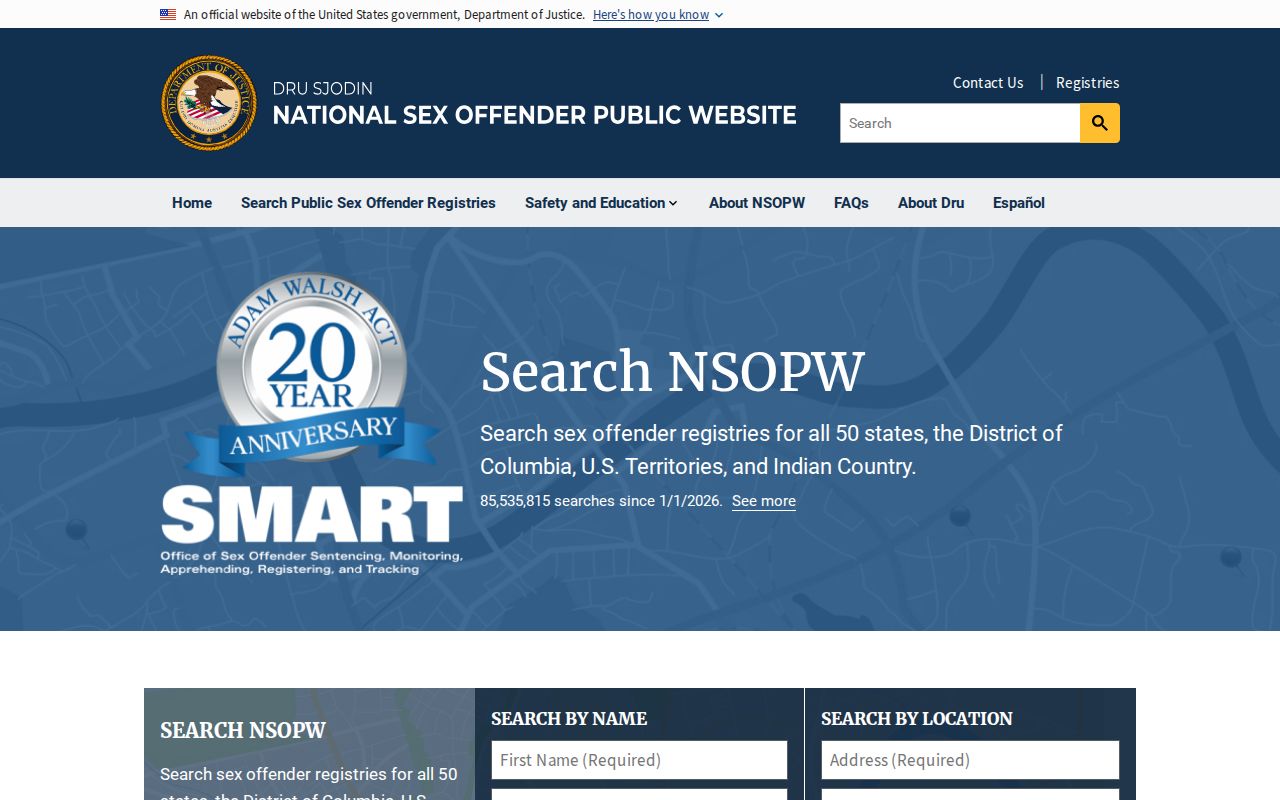
NSOPW is a gateway to jurisdictional public data, not a single complete federal registry file. If its result differs from PSOR, review the source jurisdiction and contact the responsible agency.
Lawful Use and Community Notification
Registry information exists for public awareness and safety planning. Verify a result on the live PSOR profile and keep its limits in view. A published entry is not proof of new conduct, and an absent entry is not proof that no qualifying conviction ever occurred. Report suspected noncompliance to the Roscommon County Sheriff or Michigan State Police. Do not investigate it personally.
Statutory misuse warning: MCL 28.730 makes specified misuse of registry information a crime. Never use PSOR data to harass, threaten, intimidate, discriminate unlawfully, commit vigilantism, or carry out another unlawful act.
Michigan law controls both publication and lawful use. The safest practice is simple: rely on official records, respect private and nonpublic information, and give any public-safety concern to trained authorities.